Reflections on workshops
Keynote 1 - Joe Finney Lancaster Uni - programmed original Micro:Bit
0.5 % of all chips produced in world go into computers.
Compare Blocks to Java Script-also look out for Text to Scratch (Teacher from York)
Mbit Open Source code https://github.com/lancaster-university/microbit-docs
KS5 Examples for Assembler / Compiler / Scheduler (slide coming to CAS NE)
1) Finite State Machines - Jim Green, Consett Academy
KS3 - 5 Using machines that abstract away from a computer but can develop concepts
Example 1 - Customer ordering fruits with different rules on wearing a hat or scarf
Example 2 - Turing Machine to add up numbers just by following a series of rules (presented as sweets (B+W) and different coloured lollies
http://old.computingatschool.org.uk/tft/05-160525/0400Computing_Without_Computers_Teacher_Notes.pdf
http://www.cs4fn.org/magazine/cs4fnissue14.pdf
2) Object Orientated Workshop - Jeanette Patterson Kings Priory School / CAS NE
KS5 (some KS4) quick overview of the main theory concepts - useful for reinforcing area that is not a strong point.
Keynote 2 Marcus Kaiser - Newc Uni - Neuroinformatics
https://www.societies.ncl.ac.uk/neuroinformaticsuk/
Lots of links in Orange Book
3) Network Modelling - Duncan Maidens (City of Birmingham Uni / CAS Midlands)
KS4 - KS5 (some KS3)
New Cisco Acadmey free courses and packet tracing software
https://www.netacad.com/web/uk/home/-/blogs/computing-for-schools-course/
https://www.netacad.com/
4) Graph Theory - Abstraction - Laura Fox Kings Priory School
Knights Tours / London Guide / City of London Tube map (video) / Creating Nodes
Looking at Facebook recommend links / Google Page rank / https://oracleofbacon.org/
Thursday, 6 July 2017

Wednesday, 1 April 2015
Start your engines
Copy of blogpost I was asked to contribute about my thioughts on the relevance of the new POS for computiung as part of a Barefoot / BT project
I still remember the 1st time I held a computer in my hands and touched a keyboard (well kind of it was a membrane ZX81) one Friday night at Boys Brigade. I now I have romanced the idea and at the time it was another way of playing a game on a TV screen like the Atari clone we had a home that could only play Pong / Tennis and a shooting game involving firing a gun a black moving square on the screen.
One year later Xmas 82 I got my 1st computer for Christmas a ZX Spectrum 48K with colour / sound etc. How I marvelled at the complex programs from Manic Miner to Lunar Jetman and slavishly type in BASIC code from 'Input Magazine' to make a rudimentary text adventure game (PRINT / RAND / POKE etc)
Fast forward 32 years and how things have changed in so many ways, computers and devices are more powerful by the day and can achieve things that would have been considered impossible 10 years ago never mind 20 or 30 . However I still believe that although are more adept at using them in comparison to me a the same age in some ways their understanding of the mechanics and computational thinking that I wondered at in my day is not the same. Again I fully realised that although I understood the concept of the code to run the programs I would not have known the wonder of binary arithmetic or logic gates that students know are considering at the highest levels of KS3.
The analogy of a car is still the most descriptive that I know - from tinkering under the bonnet to try and fix a broken alternator or fuel pump with my 1st Mini that only lasted 3 months until the engine broke and the wing fell off. To the average car of today that needs a computer plugging in to tell the mechanic what is wrong. Likewise students have such technical interfaces in front of them that so few are driven to tinker and understand deeper.
All of this is a very roundabout way of addressing the need for a new curriculum and develop greater computational thinking / problem solving and coding skills. It is such a transferable knowledge base in all other aspects of their lives and education that I should be higher up in status than it presently is. However I still think the hardest part is bridging the gap between understanding the thirst for knowledge from all in the class especially with the issues that mixed ability grouping brings.
However hopefully we are moving forward and when I am retired and finished and my children's children using their quantum computing machines in 30 years time look back to the end of the binary age it will hopefully be just as relevant
I still remember the 1st time I held a computer in my hands and touched a keyboard (well kind of it was a membrane ZX81) one Friday night at Boys Brigade. I now I have romanced the idea and at the time it was another way of playing a game on a TV screen like the Atari clone we had a home that could only play Pong / Tennis and a shooting game involving firing a gun a black moving square on the screen.
One year later Xmas 82 I got my 1st computer for Christmas a ZX Spectrum 48K with colour / sound etc. How I marvelled at the complex programs from Manic Miner to Lunar Jetman and slavishly type in BASIC code from 'Input Magazine' to make a rudimentary text adventure game (PRINT / RAND / POKE etc)
Fast forward 32 years and how things have changed in so many ways, computers and devices are more powerful by the day and can achieve things that would have been considered impossible 10 years ago never mind 20 or 30 . However I still believe that although are more adept at using them in comparison to me a the same age in some ways their understanding of the mechanics and computational thinking that I wondered at in my day is not the same. Again I fully realised that although I understood the concept of the code to run the programs I would not have known the wonder of binary arithmetic or logic gates that students know are considering at the highest levels of KS3.
The analogy of a car is still the most descriptive that I know - from tinkering under the bonnet to try and fix a broken alternator or fuel pump with my 1st Mini that only lasted 3 months until the engine broke and the wing fell off. To the average car of today that needs a computer plugging in to tell the mechanic what is wrong. Likewise students have such technical interfaces in front of them that so few are driven to tinker and understand deeper.
All of this is a very roundabout way of addressing the need for a new curriculum and develop greater computational thinking / problem solving and coding skills. It is such a transferable knowledge base in all other aspects of their lives and education that I should be higher up in status than it presently is. However I still think the hardest part is bridging the gap between understanding the thirst for knowledge from all in the class especially with the issues that mixed ability grouping brings.
However hopefully we are moving forward and when I am retired and finished and my children's children using their quantum computing machines in 30 years time look back to the end of the binary age it will hopefully be just as relevant
Wednesday, 25 March 2015
New Post New Start New Blog of course!!
About to make a bigger jump into Computer Science delivery than ever before so the obvious thing was to make a new blog documenting that journey.
Follow me on twitter at @sonicrobbo
Fresh back from CAS NE Regional Conference - lots of brilliant ideas to develop and try out over the coming weeks
Intro session - Paul Curzon, Queen Mary Uni of London
Great ideas about teaching computational thinking without using a computer
- The Diving Bell and the Butterfly by Jean-Dominique Bauby - how can someone with 'Locked in Syndrome' communicate / write a book by only blinking. Helper reading out alphabet is it A/B/C etc. Make it more efficient - eventually whole alphabet be done in 5 Questions is before K etc.
- Teaching Algorithms using Card tricks - Invisible Palming trick
- Simulating a neuron in a brain to make a SNAP process using 7 people
- Programming a face by responding to sounds
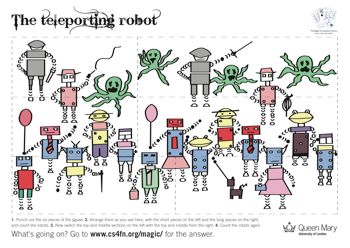
- Teleporting Robot illusion
Kelly.Smith@computingatschool.org.uk
Ideas on moving characters and then deciding action when reaching a shape
IF Colour X do 1 ELSE do 2
Variables - bbc.co.uk/guides/zw3dwmn#z22yvcw
Using cups to store Scores for a quiz
Moving into Condition's / Selection using for a Maths Quiz differentiated
Blue Square Easy / Green Triangle Average / Red Circle Challenge
Make a quiz - differentiate questions - keep scores using a variables - / + scoring
Workshop on Little Man Computer and Assembly Language Coding

Workshop on Lego - WeDo system to start creating physical systems and programming.
https://education.lego.com/en-gb/preschool-and-school/lower-primary/7plus-education-wedo/introducing-wedo
Box for students to share - built using LABVIEW software (same as MarsRover/LHC etc)
Fab cross curricular system for KS1/2 students.
/9585_prod_03.JPG)
Closing address = Simon Humphreys - CAS National Coordinator.
Misc software to investigate Pixel Spreadsheet / JES / CSBot Simulator(Rescue)
Subscribe to:
Posts (Atom)